
TQ–32 / FIXED PLATFORM / SPECIFICATION
One specification.
A complete solution.
The hardware serves the workflow. One fixed specification built around the RTX 5090: a 16-core / 32-thread CPU, a workstation motherboard, 64 GB of DDR5, a 2 TB Gen5 NVMe SSD with DRAM cache, a 1200 W power supply and 360 mm liquid cooling. Customers choose a solution, with no individual component selection.
CURRENTLY NOT AVAILABLEThe TQ–32 starting point.
Every TQ–32 ships with Qwen3.8-27B in NVFP4 served by vLLM, plus an AI agent configured for your agreed workflows, documentation and a guided handover. The agent interface is still under evaluation. This AI setup is the recommended option. The same workstation is also available as Hardware + Ubuntu only (S$14,615): assembled, burn-in tested, with Ubuntu LTS and NVIDIA drivers, and no AI models, agent or workflow setup.
64 GB host RAM is the TQ–32 baseline for model loading, a bounded CPU cache and the operating system. Our first published benchmarks ran on rented cloud servers with container RAM caps of about 116 GiB (125 GB). A later in-house test with the same GPU and a 64 GB-class RAM budget is in lab note 04; that machine is not an assembled TQ–32, and results measured on an assembled TQ–32 are pending. It does not increase the GPU’s 32 GB VRAM or guarantee a larger model will fit.
The fixed specification.
| COMPONENT | SPECIFICATION | ROLE IN THE SOLUTION |
|---|---|---|
| GPU | NVIDIA GeForce RTX 5090 32 GB GDDR7 | The local inference engine. A Founders Edition or board-partner card, depending on supply; both use the same RTX 5090 GPU with 32 GB of memory. |
| CPU | Desktop CPU 16 cores / 32 threads | Agents, tool calls, code builds and document processing run on the CPU while the GPU answers. 32 threads keep several agents responsive at the same time. |
| Motherboard | Workstation motherboard Two PCIe 5.0 GPU slots, 10GbE | Runs the GPU at full speed, and shares its platform with our two-GPU TQ–192, so a TQ–32 can grow into a larger system later. 10GbE moves large model files quickly. |
| RAM | 64 GB DDR5 2 × 32 GB | Operating system, model loading and a bounded CPU cache. Final operating speed depends on BIOS and stability validation. |
| SSD | 2 TB Gen5 NVMe SSD TLC with DRAM cache | AI agents, containers and builds write many files at once. Budget drives (QLC flash without a DRAM cache) can slow down sharply under that load; this type stays responsive. Usable space is lower after formatting and installation. |
| Cooling & case | 360 mm liquid CPU cooling Airflow case, large bottom intake fans | Keeps the CPU and GPU cool during long agent sessions, so performance holds and parts last longer. Final fan curves and power settings follow sustained-load testing. |
| Power supply | 1200 W ATX 3.1 80+ Platinum, native 16-pin GPU cable | Exceeds NVIDIA’s 1000 W system power recommendation for the RTX 5090, with stable power under all-day load and no GPU power adapters. |
| Operating system | Ubuntu LTS | A pinned, validated OS and driver image, supplied with the AI stack already installed and configured. |
Components are specified by capability, not brand. Exact models depend on supply; each machine goes through the planned burn-in and AI-stack checks before delivery.
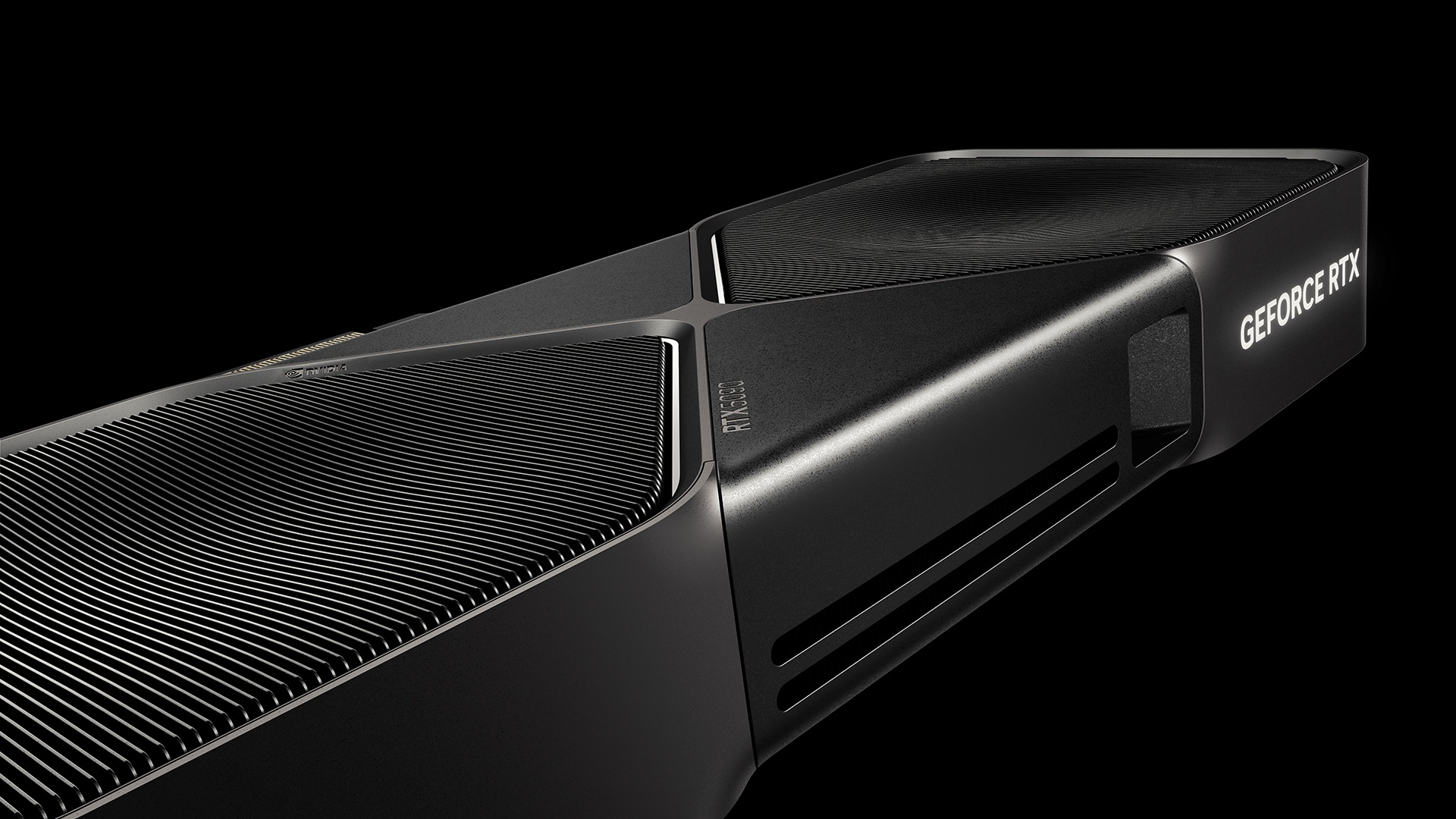
The GPU.
Product photography from the manufacturer. This image shows the RTX 5090 Founders Edition; it is not a photograph of a completed TensorQuay system.
Why this combination?
We start from the work, not the parts list. The GPU runs the model; a 16-core / 32-thread CPU keeps agents, builds and document preparation responsive while the GPU handles inference. 64 GB of RAM holds the operating system, model loading and a bounded CPU KV cache; our long-session test in lab note 04 ran a 24 GiB cache tier inside that budget.
Storage with a DRAM cache stays responsive when many processes write at once, the 1200 W ATX 3.1 power supply and 360 mm liquid cooling are sized for all-day load, and the workstation motherboard shares one platform with our two-GPU TQ–192, so every machine is assembled, tested and supported the same way, and a TQ–32 can grow into a larger system later.
TQ–192: proposed specifications.
The TQ–192 is a proposed system for larger local models and team or multi-agent workloads. It pairs two NVIDIA RTX PRO 6000 Blackwell Max-Q Workstation Edition GPUs, each with 96 GB of GDDR7 ECC memory, for 192 GB of GPU memory in total. The name follows our rule: the number is the total GPU memory. It shares the TQ–32 base platform approach, specified by capability.
Pricing: S$69,900 for Hardware + Ubuntu only, or S$74,900 with AI setup (team model serving and TensorQuay Agent setup). TQ–192 is ordered by quotation and bank transfer rather than online checkout; supply and delivery timing are confirmed in the quotation.
| COMPONENT | PROPOSED SPECIFICATION | ROLE IN THE SOLUTION |
|---|---|---|
| GPU | 2 × NVIDIA RTX PRO 6000 Blackwell Max-Q 96 GB GDDR7 ECC each, 192 GB in total | The local inference engine for larger models, such as mixture-of-experts models that do not fit in 32 GB. Each card draws about 300 W and uses a dual-slot blower that exhausts out of the case rear, designed to be installed side by side. |
| CPU | Desktop CPU 16 cores / 32 threads | Host-side processing, agents, document preparation and concurrent application work. |
| Motherboard | Workstation motherboard Two PCIe 5.0 GPU slots (x8/x8), 10GbE | Runs both PCIe 5.0 x16 cards at x8 each, with 10GbE networking for team access. |
| RAM | 128 GB DDR5 2 × 64 GB | Headroom for large models: loading and reloading 150 GB-class models, room for conversation memory to overflow from the GPUs when many people or very long documents are in use, and the agents, containers and tools running alongside. 128 GB is the most this platform runs at full memory speed with two modules. GPU makers recommend generous system memory for professional GPUs; we will publish measured memory use after the first TQ–192 is tested. |
| SSD | 2 TB Gen5 NVMe SSD TLC with DRAM cache | One drive for Ubuntu, models, tools and working data. Usable space is lower after formatting and installation. |
| Power supply | 1600 W ATX 3.1 80+ Titanium | Headroom for two GPUs and the CPU, with native 16-pin GPU cables. |
| Cooling & case | 360 mm liquid CPU cooling Airflow case with large bottom intake fans | Feeds fresh air to the two blower GPUs, which exhaust out of the rear, while the liquid cooler handles sustained CPU load. |
| Operating system | Ubuntu LTS | A pinned OS and driver image, supplied with the agreed AI stack installed. |
Proposed · available by enquiry. The TQ–192 shares the TQ–32 base platform approach; components are specified by capability, not brand. No TQ–192 has yet been assembled or tested, and no TQ–192 assembly or performance is represented as validated. Final pricing, supply and the supported AI setup are confirmed per quotation; delivery timing follows supply. Our GLM-5.3-Flash lab note used two RTX PRO 6000 Server Edition GPUs in a different system; its results are not TQ–192 results.
TQ–A128: the agent server for teams.
An AI agent server for teams and SMEs in Singapore: 16 cores / 32 threads, 128 GB RAM, no GPU needed. We supply the hardware with TensorQuay Agent, our open, on-premise agent platform (pre-release), set up for your team. It is model-agnostic: a model router connects your agents to local or cloud models through any OpenAI-compatible endpoint. The name follows our agent line: A for agents, and 128 for the gigabytes of system RAM, not GPU memory.
Available to order · delivered within 1 week, within Singapore. S$8,490, including assembly, burn-in testing, agent platform setup for your team and a guided handover. Optional software maintenance is S$299 a year.
Warranty: 3-year parts warranty, labour included, with carry-in service: bring or courier the server to us, and TensorQuay diagnoses, repairs and handles the manufacturer claims. Pickup and return is available as a paid option, or with the maintenance plan. Not covered: accidental damage, misuse, liquid damage or unauthorised modifications.
| COMPONENT | SPECIFICATION | ROLE IN THE SOLUTION |
|---|---|---|
| CPU | Desktop CPU 16 cores / 32 threads | Agents, their sandboxes, tool calls and builds run on the CPU. The server needs no GPU: models are reached through the model router. |
| Motherboard | Workstation motherboard Two PCIe 5.0 GPU slots, 10GbE | The same base platform as the TQ–192, with 10GbE networking for team access. Add GPUs later and it becomes a TQ–192 base. |
| RAM | 128 GB DDR5 2 × 64 GB | Memory for the agent platform, sandboxes, shared workspaces and tools running alongside each other. We have not yet measured how many sandboxes run at once. |
| SSD | 2 TB Gen5 NVMe SSD | Workspaces, sandbox images and tool data. Usable space is lower after formatting and installation. |
| Power supply | 1600 W ATX 3.1 80+ Titanium | Headroom for the GPUs you may add later. |
| Cooling & case | 360 mm liquid CPU cooling Airflow case | Keeps the CPU cool under sustained agent workloads. |
| Operating system | Ubuntu LTS | Supplied with TensorQuay Agent installed and configured for your team. |
Included and set up for you
- User accounts and roles
- A sealed sandbox per agent task
- A model router to local or cloud models (any OpenAI-compatible endpoint)
- Secrets kept outside the sandboxes
- A network allow-list
- Shared workspaces
- Tool connectors (MCP)
- A shared channel where agents and people coordinate
TensorQuay Agent is pre-release software, set up and handed over for your team. We do not state a supported number of sandboxes, agents or users until we have measured one.
Sources & image credits.
TQ–32 specifications were checked on 18 September 2026 and RTX PRO 6000 Max-Q specifications on 30 September 2026. NVIDIA retains its image and trademark rights; other names are trademarks of their respective owners. Images and names identify components and do not imply endorsement or authorised partner status.